
Creating a Third Space
How I Created An Event to Facilitate and Capture Black Joy as a Filmmaker

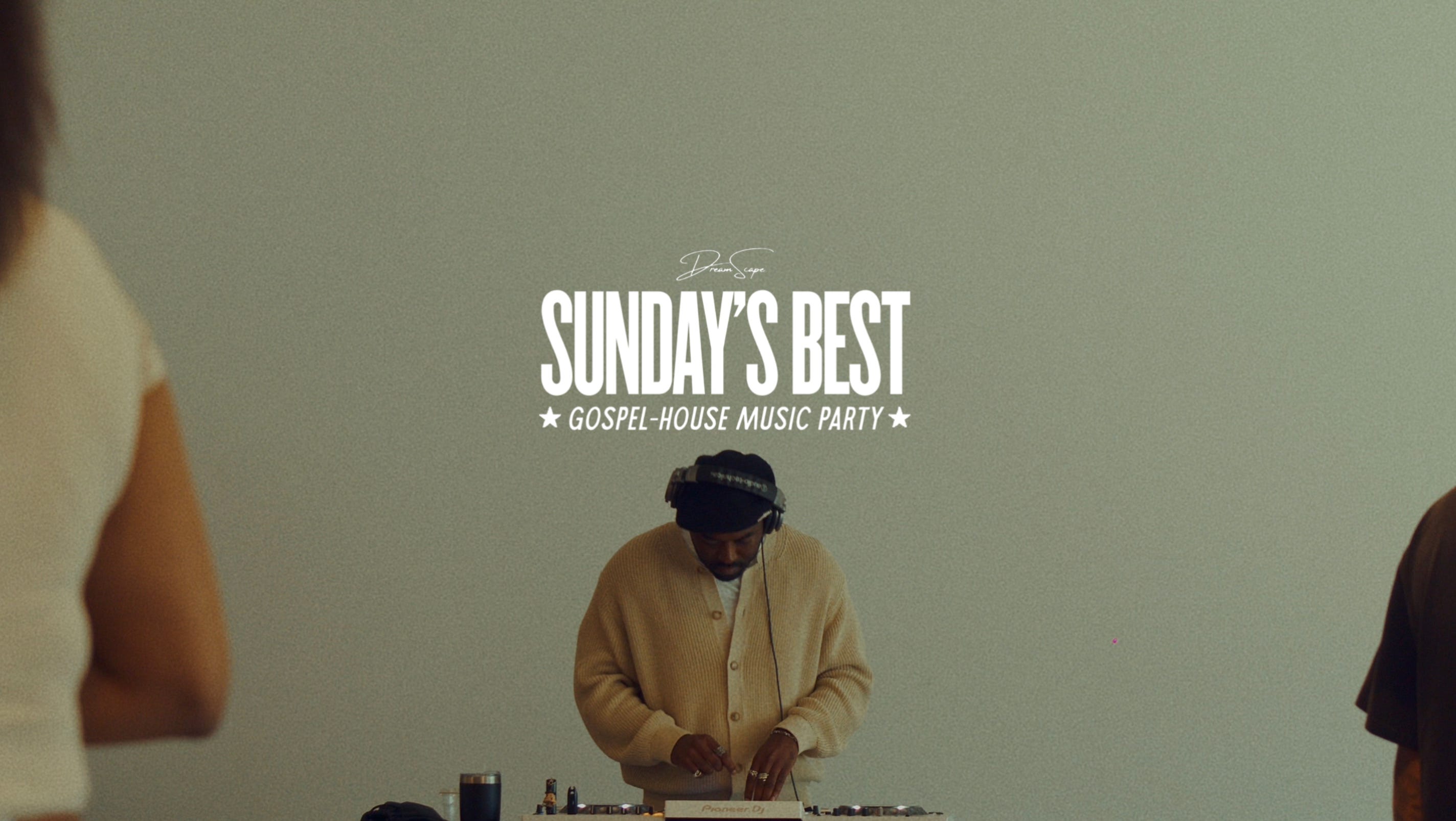
The very first time I heard Gospel House, I was far removed from all things gospel related, but the sound evoked feelings of nostalgia and a longing for communing again in a way that only the church could provide.
“We’re losing third spaces! Everything is a money grab!”
If you read any think piece on the decline of society, the death of club culture, the lack of community, you will hear the lamentations of the nearly extinct third space. While third spaces still exist, in a world where the economy is causing a lot of us to be more mindful of where our money goes. A lot of us don’t have the extra income for community behind a paywall.
I’ve been creating events since 2015. I’ve been able to keep most of them free to attend by paying the overhead expenses up front, and if free isn’t feasible, I’ve kept my general admission tickets under $30. My main ethos has always been create the things you want to experience. And this has rung true in every aspect of my creativity. I write stories I want to read, events I always dreamt of attending and now filming the films I want to watch. I never believed in complaining about the lack thereof. I just…made it exist.
Enter Sunday’s Best
I grew up in C.O.G.I.C.-- a strict branch of the Pentecostal denomination in the 90’s. I remember the midnight musicals, the revivals, the Convocations, AIM. I sang in every iteration of choir from Sunshine Band to Youth Choir to Adult Choir. I directed the choir, played drums, wrote original music. I was a full on church kid vying for my Grandmother’s constant approval. She was a celebrity of sorts in that world, and the pressure to be a perfect and beautiful child was overwhelming for me. It was so overwhelming for me that by the time I was 15, I was failing miserably and the holy glow I maintained faded along with my grandmother’s approval. At 17, I became pregnant through abuse of a boy I liked, and C.O.G.I.C. knocked the remaining halo off of my head. I was pulled from choir, from the youth programs, the first lady remarked “I ain’t know she did all of that”, and my grandmother began to reprimand me in public and deemed me only worthy to drive her to church and carry her purse and bible.
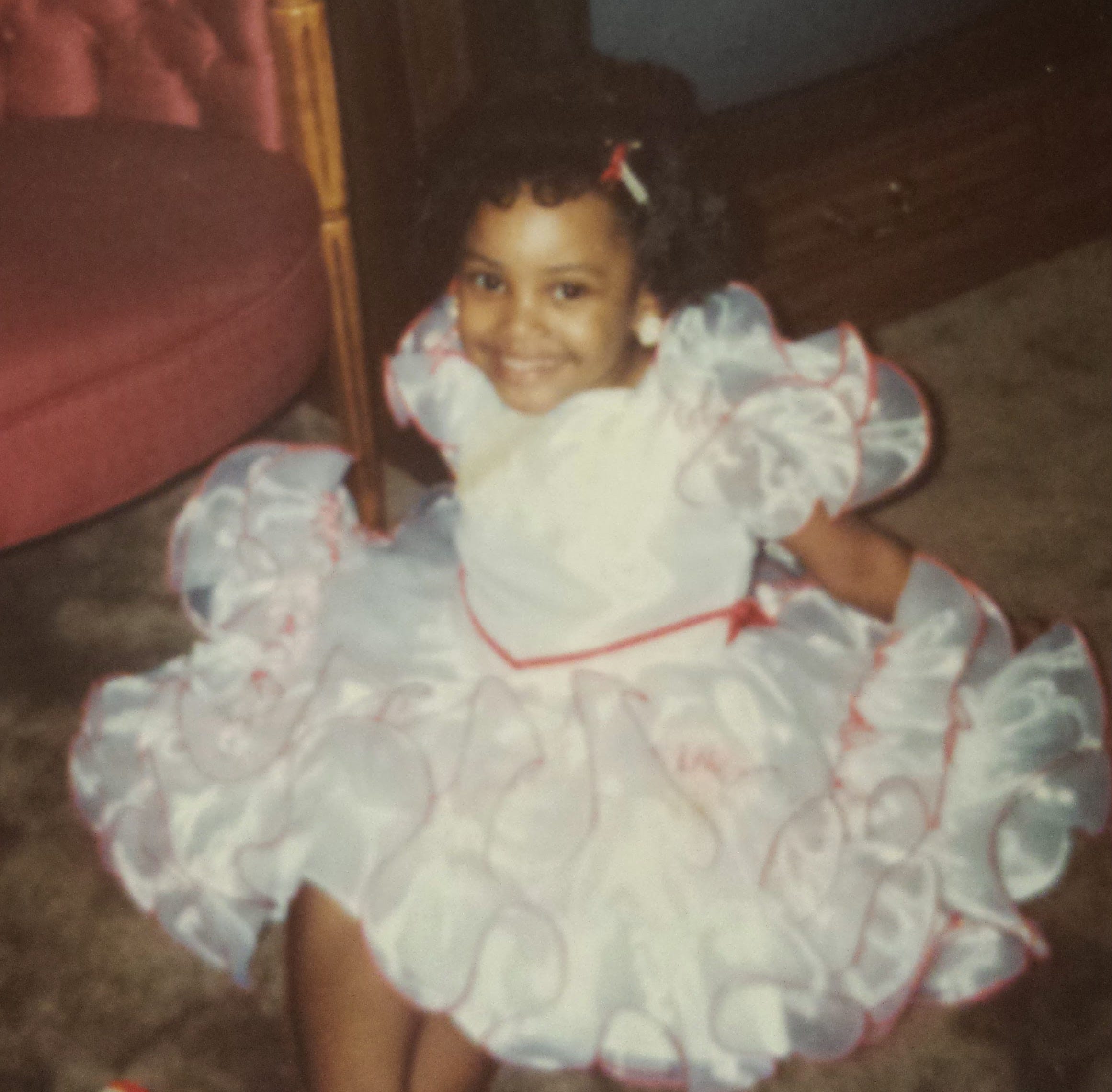
I won’t go into the amount of pain that caused. My baby was born, I was told to go in front of church and apologize for having her and I said emphatically, no. I left the church. I left the indoctrination. I was determined to never ever be a part of a group of people that treated others like disposable pawns again.
Even though I turned my back on the institution, the music, Gospel Music remained my favorite genre. Fred Hammond, Kirk Franklin, John P. Kee, The Clark Sisters were the soundtrack of my childhood. Though the institution of church let me down, the music never did.
I still valued dressing up and having somewhere to go on Sundays. For a lot of us Black folk, Sundays (and the banquets and other events) were the only real time one could justify shelling out precious cash for a good dress, pearls and shoes if it wasn’t for prom or a wedding. The Sunday’s Best was an institution all on its own.
So when you have a generation of kids, Millennials, increasingly turning away from church, you have the loss or perceived loss of a consistent reason to dress up–to see yourself in your best.
The House
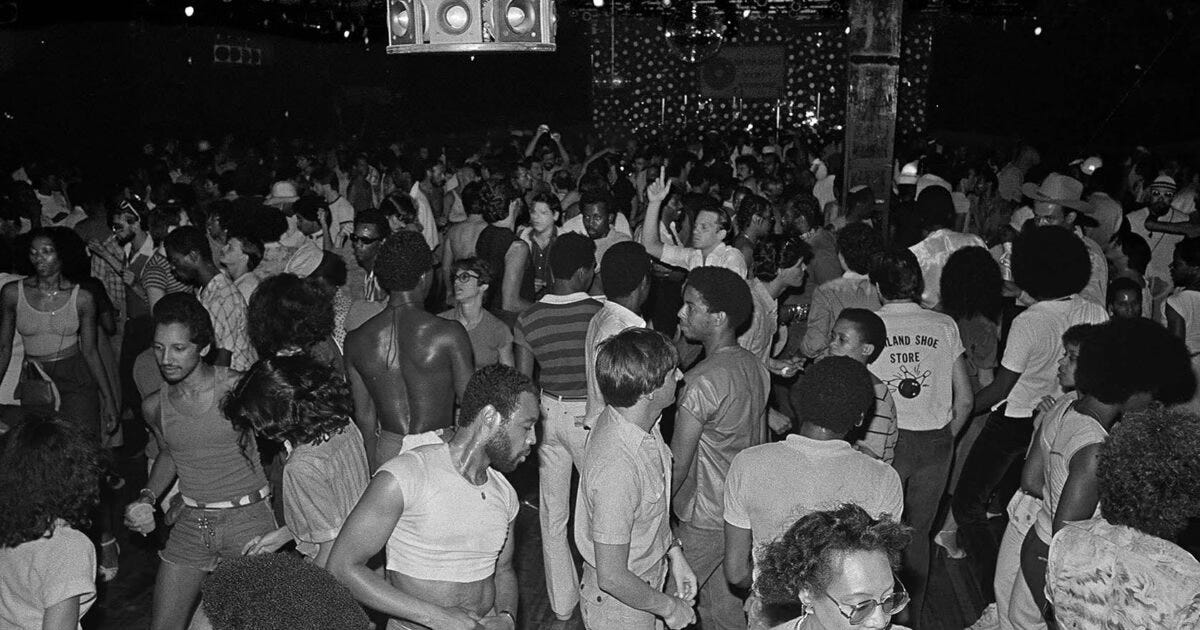
I grew up in Chicago, a home of House Music. Black and queer gathered underground and created upbeat mixes for parties. It didn’t go mainstream at first. It was an IYKYK affair until Frankie Knuckles blew it up. My story about turning away from the institution? Many queer folk experienced this rejection and worse in the churches that they constantly contributed to. No matter how good they played the organ or directed the choir, there was always a schism that was hidden in the side eyes and whispers and backhanded compliments. The very conglomerate that taught Brotherly Love and the edicts of Christ wasn’t a safe space.
Well, the “church”, became the underground. If you watch Pose or Paris Is Burning, you can see how the Ballroom culture is directly modeled after the church. House and her many different iterations served this. Soulful House, Deep House and Gospel House. The uplifting harmonies and messages of gospel were put to the funky, grungy House beats and thus was born a largely underground subgenre.
Times Are Changing
I’m not a Christian anymore. Walking away from the church led me to a greater appreciation of the institution. Seeing our society now en masse turning away from the church has left a void in our communities. We don’t have the Friday Fish Fry or Sunday school or musicals to congregate at. I actually think the rise in parties like Soulection, Everyday People and Boiler Room stands in that place. There’s plenty of gospel parties, too, but they feel more tailored to the Believer crowd, which is fine, but it kind of feels not tailored to us secular folks who just want to enjoy the music without the religious ritual.
I used to do jam sessions and parties and would frequently integrate gospel into my sets, but folks would get uncomfortable singing about Jesus with a glass of whiskey in their hands. I get it, but I wish more folks understood that Gospel has roots in Country, the Blues, Jazz and R&B. All of it is inherently the song of Black Americans who made a way out of no way and recorded the struggle and triumph through all of these genres. Gospel goes beyond religion. It is our documentation. The secular argument has been going on for years. Sam Cooke was admonished for crooning about the Lord in the same chord progressions and Kirk Franklin was considered downright blasphemous for introducing rap and hip hop beats in his iteration of gospel. But for us, this is revolutionary (no pun intended).
But…Zack Fox played Kurt Carr at Camp Flog Gnaw and, while it got some mild backlash (I will never co-sign anyone saying “let’s shake ass for Jesus”, like be so for real), a lot of former PK’s and church kids were able to tap into the nostalgia of a time where church felt like peak glamour and entertainment. And, if you weren’t familiar, there’s no denying the soulfulness of the music. You can never listen to gospel and stay in a bad mood.
Creating That Third Space
And here’s where I re-enter the chat. Despite all of the pain, shame and embarrassment I suffered in the institution of a corporatized church, my love of the idea of a space where you gather, listen to uplifting music and congregate and leave while the sun is still up, prevailed. I was inspired to create a non-religious party centered around Gospel House.
My love, Carl, brokered a deal with the owner of a cafe and venue space that just so happens to be a pastor who believed that the message can still be in the music, but that an event that welcomes all races, orientations and religions was more than just needed, it is literally being what Jesus mandated all of his followers to do. Me, I wanted to honor the innocence of my childhood. My relationship with my grandmother, though layered and complicated, is forever special to me. She passed away in 2022, and I grew even closer to the heritage that the Black church has. I just wanted to cut out the toxic part. I wanted to facilitate uncompromised joy.
I had no idea that so many people shared this sentiment with me.
On May 17, 2026, Carl and I debuted Sunday’s Best: A Gospel House Music Party. The first flyer post (Carl designed the flyer for me and I based the design off of old revival posters and jazz concert posters I grew up seeing from the 50’s and 60’s), received almost 10K views and 400 shares. That’s huge for an event flyer with no video. The curiosity was PIQUED. I was nervous because I hadn’t done an event in three years due to burnout and I was afraid that no one would care.


We hired my two dj friends that had been rocking with me since my first parties and they are hands down two of the most prominent alternative/house/niche djs in Orlando. The cafe, normally closed on Sundays, opened up and was soon packed with folks wanting their caffeine fix. The sound was wired all throughout the property, so no matter where you went, you could hear the goodness that was pulsing from inside the main hall.
About 150 souls poured into the space. Dressed freely, religions left at the house, bringing their babies and parents all together dancing without a care in the world. Folks came to film, to photograph, to draw and create. All for no door charge.
Capturing Black Joy
Though the audience was diverse, I really wanted to ensure that I captured the purest essence of unadulterated Black Joy. My heart went a flutter when they broke out the Electric Slide and the Boots on the Ground shuffle. Seeing the queer community having a space that didn’t center them, but still paid homage and respect to them made me feel warm. And when the fans got to flapping, I knew that I had created something bigger than I could have imagined.
If you read my previous essay on how watching films from a syllabus I created affected how I will approach my work moving forward, you can see some of the elements I put into practice through the screen grabs from the micro doc, I shot. You will see Mate’s close ups, Jafa’s symbolism. And then you’ll see me. The girl who was once outcast from the very institution she loved creating the space that she never ever thought was possible.
Hey! My name is Tyla Harrington and I am a filmmaker currently in pre-production for my first short film, Blue - A Southern Gothic Fairy Tale. I’m so happy you made it this far! Please consider subscribing as I take you on my filmmaking journey.